
Master Programme in Spacecraft Design
120 credits, programme, master's level, TMRDA
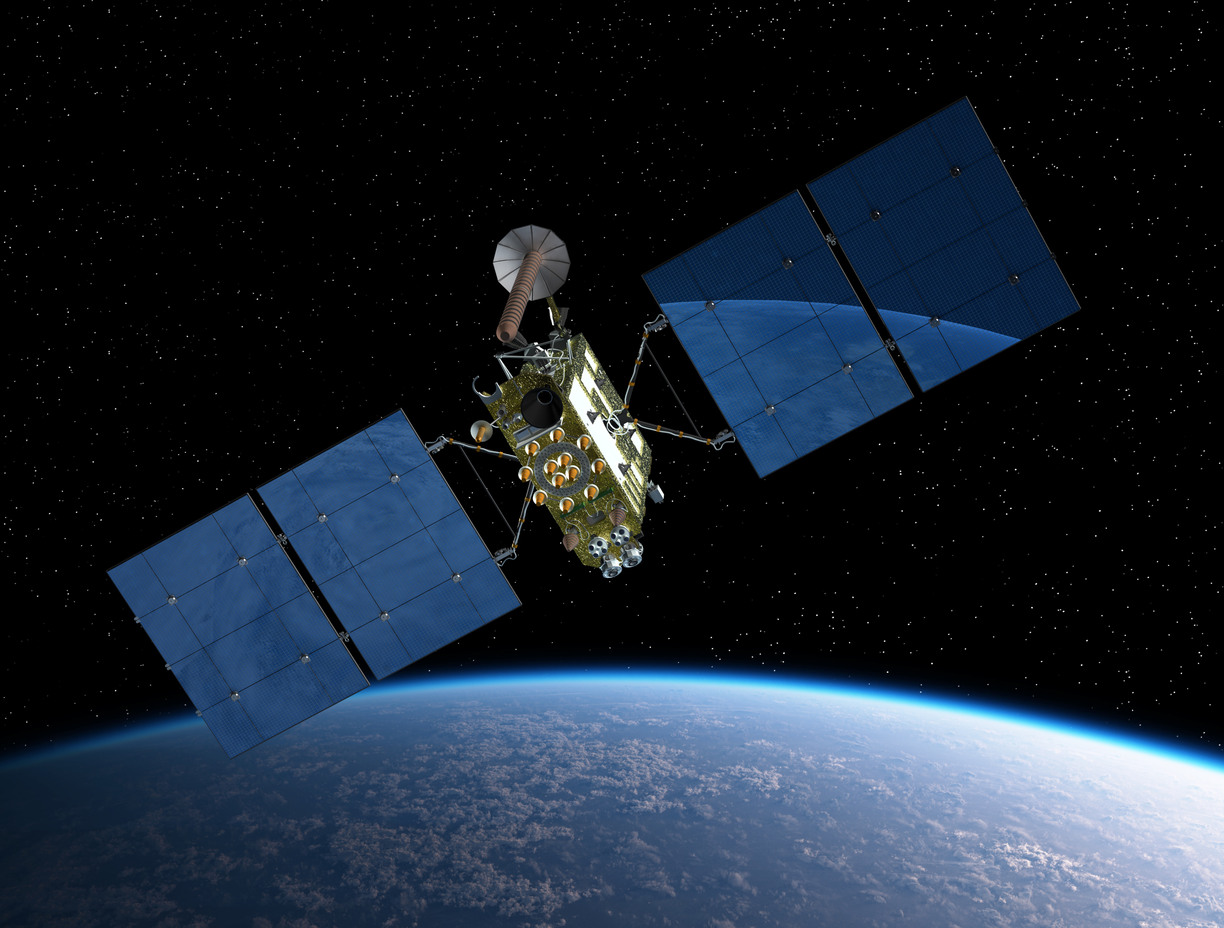
In the city of Kiruna, Sweden’s space capital, you can immerse yourself in an exciting and prestigious field: Spacecraft Design. You will learn how to integrate complex technical systems that need to function in an extreme environment: Space.
The education is in line with the latest technology and research in spacecraft development. Throughout the program, you will build up knowledge that you will later leverage to develop instruments and spacecraft.
Your first year focuses on how a spacecraft operates, the requirements it must meet together with its payload in the environment it operates in. You study the various subsystems, how to construct the spacecraft and how it communicates with the external world. You will gain an understanding of specialised space electronics and typical space materials and learn how the onboard computers and propulsion systems function. You learn to control and maintain the spacecraft´s orientation and trajectory.
During the spring semester of the first year, you commence a project that continues into the fall semester of the second year. Alongside fellow students and researchers, you will construct an instrument designed to withstand being launched via a rocket or a high-altitude balloon into the stratosphere. We have strong collaboration with the Esrange Space Centre in Kiruna, which launches sounding rockets and large high-altitude balloons. This collaboration provides you with access to their expertise infrastructure.
The second year begins by applying your knowledge to develop and design a spacecraft in a computer environment, in collaboration with fellow students. This is where you will put all your knowledge from your first year into practice. Simultaneously, you will continue with the project work that started in the first spring semester.
You conclude the education with your thesis project, and many students choose to execute it at a space company, space organisation, or research institution, either in Sweden or abroad. When completing your education, you will have built a solid professional qualification and strong network that can shape your future career.
Former students have pursued research studies or found work in the global space industry and organisations. Major players in Europe include ESA, DLR, CNES, and EADS/Astrium. In Sweden, notable companies include SSC, OHB Sweden AB, RUAG Space AB, and Omnisys Instruments. With a high level of professional qualifications, you become a sought-after candidate in the job market.
Sign up for the programme
LTU-97014
Open for late application!
Master Programme in Spacecraft Design
Start date 2024-09-02, v. 36 2024, KirunaNormal teachingDay-time 100%Autumn 2024
Programme overview
120 cr
120 credits, programme, master's level, TMRDA
In the city of Kiruna, Sweden’s space capital, you can immerse yourself in an exciting and prestigious field: Spacecraft Design. You will learn how to integrate complex technical systems that need to function in an extreme environment: Space.
The education is in line with the latest technology and research in spacecraft development. Throughout the program, you will build up knowledge that you will later leverage to develop instruments and spacecraft.
Your first year focuses on how a spacecraft operates, the requirements it must meet together with its payload in the environment it operates in. You study the various subsystems, how to construct the spacecraft and how it communicates with the external world. You will gain an understanding of specialised space electronics and typical space materials and learn how the onboard computers and propulsion systems function. You learn to control and maintain the spacecraft´s orientation and trajectory.
During the spring semester of the first year, you commence a project that continues into the fall semester of the second year. Alongside fellow students and researchers, you will construct an instrument designed to withstand being launched via a rocket or a high-altitude balloon into the stratosphere. We have strong collaboration with the Esrange Space Centre in Kiruna, which launches sounding rockets and large high-altitude balloons. This collaboration provides you with access to their expertise infrastructure.
The second year begins by applying your knowledge to develop and design a spacecraft in a computer environment, in collaboration with fellow students. This is where you will put all your knowledge from your first year into practice. Simultaneously, you will continue with the project work that started in the first spring semester.
You conclude the education with your thesis project, and many students choose to execute it at a space company, space organisation, or research institution, either in Sweden or abroad. When completing your education, you will have built a solid professional qualification and strong network that can shape your future career.
Former students have pursued research studies or found work in the global space industry and organisations. Major players in Europe include ESA, DLR, CNES, and EADS/Astrium. In Sweden, notable companies include SSC, OHB Sweden AB, RUAG Space AB, and Omnisys Instruments. With a high level of professional qualifications, you become a sought-after candidate in the job market.
Programme overview
120 cr
Sign up for the programme
LTU-97014
Open for late application!
Master Programme in Spacecraft Design
Start date 2024-09-02, v. 36 2024, KirunaNormal teachingDay-time 100%Autumn 2024

Students meet space companies
LiftOff is a job fair that occurs every year at Kiruna Space Campus focusing on space related work opportunities, arranged by students for students.
Meet a space scientist
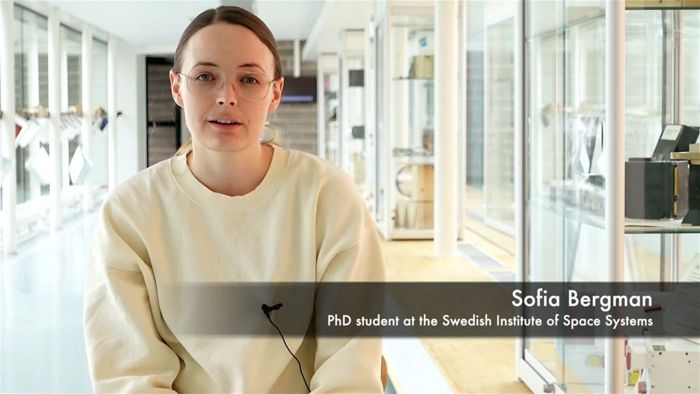
Sofia Bergman is a Phd student at the Swedish Institute of Space Physics, IRF. Here she tells about her project, why she choose the space field and her future career dreams.

Students execute a space experiment
Students in Kiruna have launched an experiment on the Bexus 33 balloon into the stratosphere.

Do you have questions about the program?
Our staff will answer you as soon as possible.
Updated: