
Idag
Olle Norberg awarded medal for collaboration
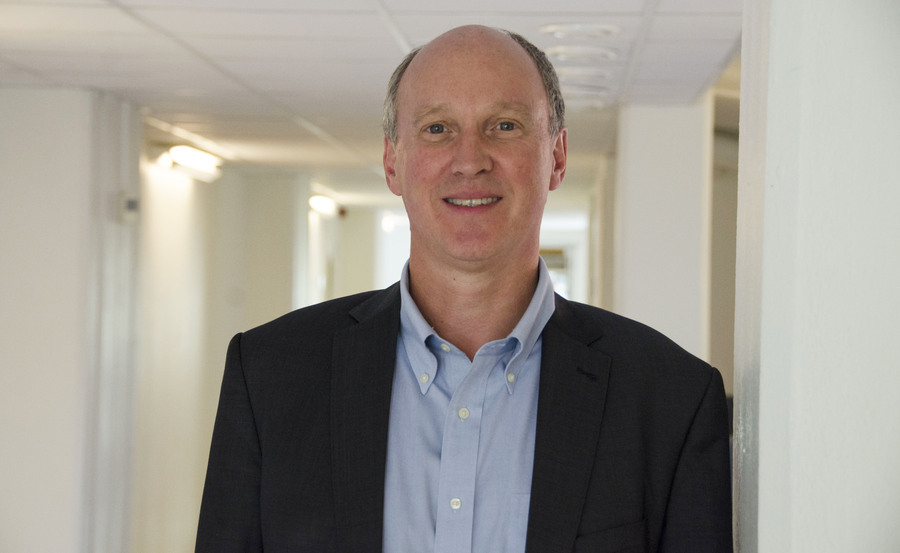
Olle Norberg, Director-General of the Swedish Institute of Space Physics, has been awarded Luleå University of Technology’s first medal for collaboration. Through leadership roles at the Swedish Institute of Space Physics, the Swedish National Space Agency and Esrange Space Center, and previously as Pro Vice-Chancellor for Space at Luleå University of Technology, he has built bridges between academia, government agencies and industry at regional, national and international levels.
How does it feel to receive this award?
“I was delighted and honoured to receive the award! Especially as this is the first time the medal for collaboration has been awarded. What an honour!"
Can you give some concrete examples of collaborations you are particularly proud of?
“One example is the project Space for Innovation and Growth (RIT) and its successor, Space Sweden North. These projects have built an ecosystem involving all the space sector stakeholders in northern Sweden, helping them find fruitful collaborations that strengthen their organisations. Another example is the graduate schools in the space field that we have jointly run for many years and are now ensuring will continue. For doctoral students, graduate schools are an excellent way to build networks and gain an understanding of other fields of research.”
Why is collaboration between universities, research institutes and industry important?
“It is essential for translating research into practical applications that strengthen Sweden. Collaboration with researchers at universities and research institutes boosts industrial competitiveness. Our distinctive culture of collaboration has been crucial in making Sweden one of the world’s most innovative countries.”
Why is close collaboration particularly important for the space sector?
“The space sector requires specialist expertise and also attracts talented people. It is vital that we can attract these people as employees, researchers, engineers, students, doctoral students and more. Through strong partnerships, we can recruit and retain people from around the world, strengthening and developing our organisations.”
You previously served as Pro Vice-Chancellor for Space at Luleå University of Technology. Do you think this has made it easier to build bridges between the different organisations?
“Yes, absolutely. That role gave me valuable insight into Luleå University of Technology’s activities and an understanding of how the University and other organisations can benefit from collaboration in the space field. It has been particularly rewarding to contribute to this through my work at the Swedish Institute of Space Physics, as well as alongside other space sector stakeholders across Sweden.”
Finally, what does the future hold for Sweden’s space sector?
“Space will become increasingly important across many areas of society. Companies and government agencies will use satellite data to improve their efficiency, and the Swedish Armed Forces will also use satellites in their operations. Satellite launches from Esrange will be a major catalyst for Sweden’s space sector, allowing us to carry out education, research and innovation, as well as satellite launches and operations, here in Sweden. Space research will also lead to remarkable new discoveries and help inspire young people to take an interest in technology and the natural sciences!”
Published:
Updated: