
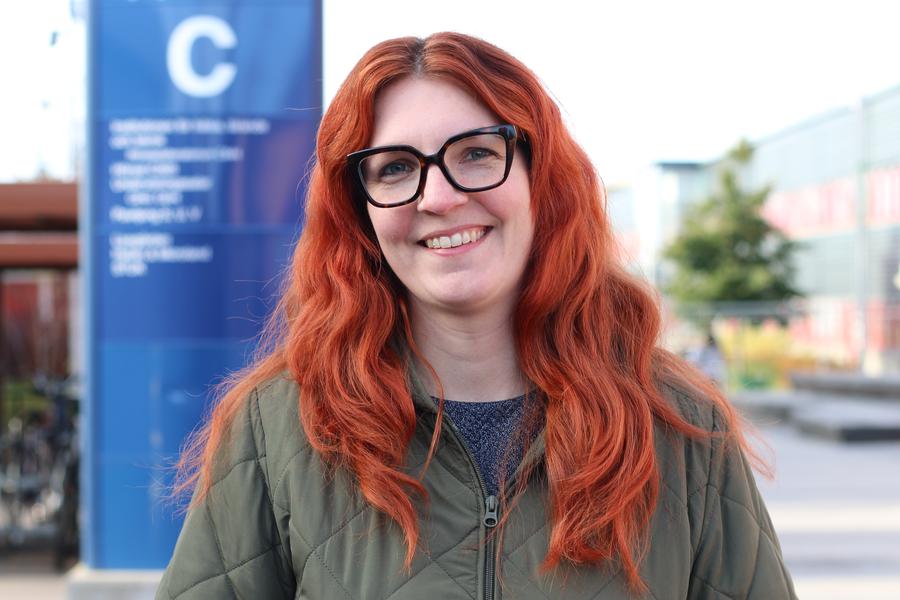
Ida Edskär, adjunct professor at Luleå University of Technology.
16 October 2026
The industrial perspective is intended to contribute to more sustainable and efficient construction
How can the construction industry become more productive, climate-smart, and better equipped to meet the demands of the future? As an adjunct professor at Luleå University of Technology, Ida Edskär—technical director at Lindbäcks Bygg and a former researcher in timber construction—aims to strengthen the link between research and the concrete needs of the construction industry.
Luleå University of Technology has been collaborating with Lindbäcks Bygg, one of Sweden’s leading industrial construction companies, for several decades. This collaboration is now being strengthened as Ida Edskär takes on the role of adjunct professor in the research field of Construction Management and Building Technology.
For Ida Edskär, this adjunct position offers an opportunity to bridge two worlds that stand to gain greatly from closer collaboration. With experience in both research and industry, she wants to help ensure that research questions focus on problems that are important to the construction industry—while also ensuring that new knowledge can be put to practical use more quickly.
“For me, it’s about serving as a bridge between industry and academia. I can contribute the industry’s perspective on our needs and challenges, while also bringing knowledge from research back to the industry. Ultimately, it’s about working together to contribute to better construction and societal development,” says Ida Edskär.
As technical manager at Lindbäcks Bygg, she works in an environment where many perspectives must be managed simultaneously. Research can delve deeply into a specific problem, while industry must simultaneously deal with customers, clients, finances, production, regulations, and technical requirements.
“In the industry, there’s a different kind of complexity and a different pace. We constantly need to balance many different interests. At the same time, the construction industry faces major challenges: we need to become more productive and efficient while also building in a more sustainable and climate-smart way. There is great potential in developing solutions together with the university.
Research Tailored to the Construction Industry’s Needs
One area she considers particularly urgent is fire safety in wood-frame buildings, especially from a property and insurance perspective. For technical solutions to have an impact, they must not only work but also be predictable and insurable.
Another key issue is the interplay between climate impact and energy use. Buildings should have low energy consumption over many years of operation, but measures to reduce energy use can simultaneously involve more materials and thus a greater climate impact during the construction phase.
“We need to be able to view the climate and energy perspectives together. Those who own and manage buildings naturally want low energy consumption, but at the same time, we must reduce the buildings’ climate footprint. There are trade-offs here that we need to understand better.”
Changing needs in the housing market are also placing new demands on industrial construction. Lindbäcks Bygg has extensive experience with student housing, rental apartments, and condominiums, among other things, but the future requires that industrial construction systems also be adaptable to other types of housing, such as security-classified buildings. Climate change, digitalization, and new business models are additional factors influencing how construction needs to evolve.
In her role as adjunct professor, Ida Edskär will, among other things, participate in doctoral projects and contribute an industry perspective to the research. Lindbäcks has previously collaborated with the university in the area of education, including through projects in courses on industrial construction and through thesis projects. The goal is to further strengthen these ties.
Returning to Research
For Ida Edskär, this appointment also marks a return to an environment she knows well from her time as a researcher.
“I’ve always said that I’d love to come back. I enjoy working on things we don’t quite know the answer to yet—delving deeply into a problem and trying to understand it. What drives me is curiosity, but also the fact that this knowledge can actually be put to use and benefit the industry.”
She hopes that the close relationship between the university and industry can give rise to both new research questions and solutions that, in the long run, will influence how the buildings of the future are designed and constructed.
“It’s very inspiring to be able to discuss the challenges we face in the industry together with researchers. You don’t always know from the start where it will lead, but that’s often where new ideas emerge.”
Published:
Updated: