
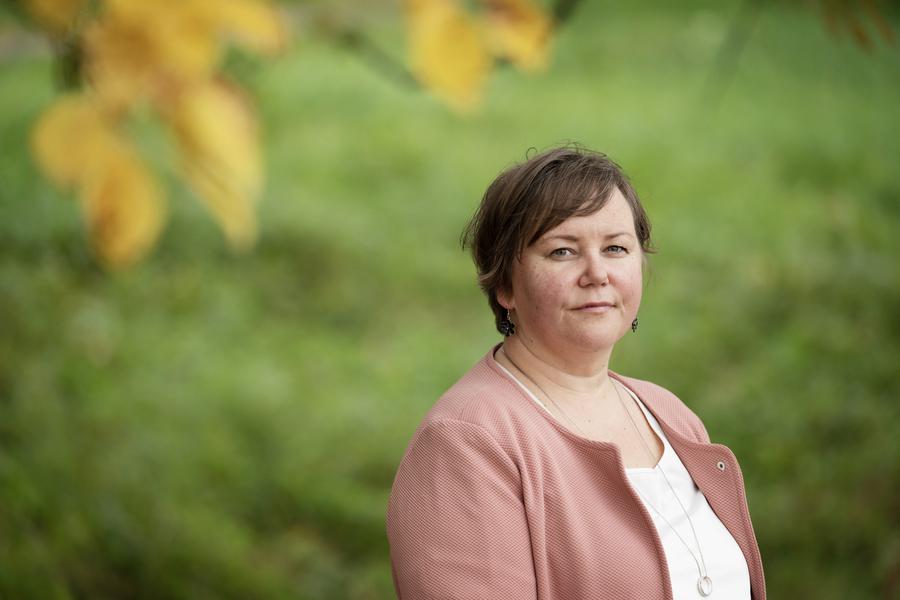
Malin Eneslätt, Senior Lecturer in Nursing at Luleå University of Technology.
19 October 2026
Research aims to get more people talking about death
Everyone will die, but many people find it difficult to talk about death. Working with community organisations and representatives of national minorities, researchers have explored ways to address questions about the end of life. A digital tool is now being made available to everyone to help people reflect and start conversations.
“Many people find it difficult to talk about the end of life. There are few occasions in everyday life when the subject comes up naturally. People may be afraid of upsetting someone they care about. That is why we have developed a tool to help people talk to others and reflect on their own wishes,” says Malin Eneslätt, Senior Lecturer in Nursing at Luleå University of Technology.
For several years, researchers in the DöBra research programme have adressed questions about the end of life. One project developed the DöBra cards, a Swedish version of paper cards designed to support conversations about death. The cards have now been developed into a web app available to everyone: DöBra – samtal för livet.
From practical to existential
Malin Eneslätt sees several benefits in being willing to talk about death, both for the person approaching the end of life and for those close to them.
“In my work as a nurse, I saw how things comes into sharp focus when life draws to a close: the life you have lived and the relationships you have had. It can make it easier to have thought about these questions beforehand. It also helps those close to you and reduces the risk of conflict. International research has shown that talking about the end of life and knowing what a person wanted can make grieving easier for those left behind. You do not have to keep wondering, ‘Was this really what Mum wanted?’” says Malin Eneslätt.
The app was developed with several community organisations and tested by people across Sweden. It contains 37 statements for users to consider and reflect on. They cover practical, physical, social and existential matters, from having your finances in order to feeling that you have lived life to the full. Users can also add their own statements.
“Talking about death is talking about life”
According to Malin Eneslätt, it can be helpful to approach the subject well in advance. Conversations may become more sensitive and difficult when death is near. She says that many older people think about death but have nowhere to talk about it, and the app could provide support. She also hopes the discussion will reach younger people.
“None of us can avoid death. We will face our own death and the deaths of people around us. Since we do not know when we will die, it makes sense for everyone to prepare and talk about it. This may sound a little frightening. But talking about death is also talking about life, and how to live it as well as we can,” says Malin Eneslätt.
About DöBra
The DöBra research programme was established at Karolinska Institutet and Umeå University. It includes several research projects focused public health approaches to the end of life. The DöBra cards 2.0 project, based at Luleå University of Technology, has developed a digital version of the DöBra cards conversation tool. Malin Eneslätt leads the project in collaboration with researchers at Luleå University of Technology, Umeå University, Karolinska Institutet, Mälardalen University and Vrije Universiteit Brussel.
The tool was developed jointly with representatives of Swedish Dementia Association, death doula Mirja Mörtlund, Funktionsrätt Luleå, Internationella kvinnoföreningen Esperanza, Kalix Municipality, Nätverket för samisk hälsa, PRO, the Swedish Heart and Lung Association, the National Association of Swedish Tornedalians, Tornionlaaksolaiset (STR-T), the Swedish Association of the Visually Impaired (SRF), Ung Cancer and Elderly Support at Luleå Municipality between 2024 and 2026.
Contact
Malin Eneslätt
- Senior Lecturer
- 0920-493934
- malin.eneslatt@ltu.se
- Malin Eneslätt
Published:
Updated: