
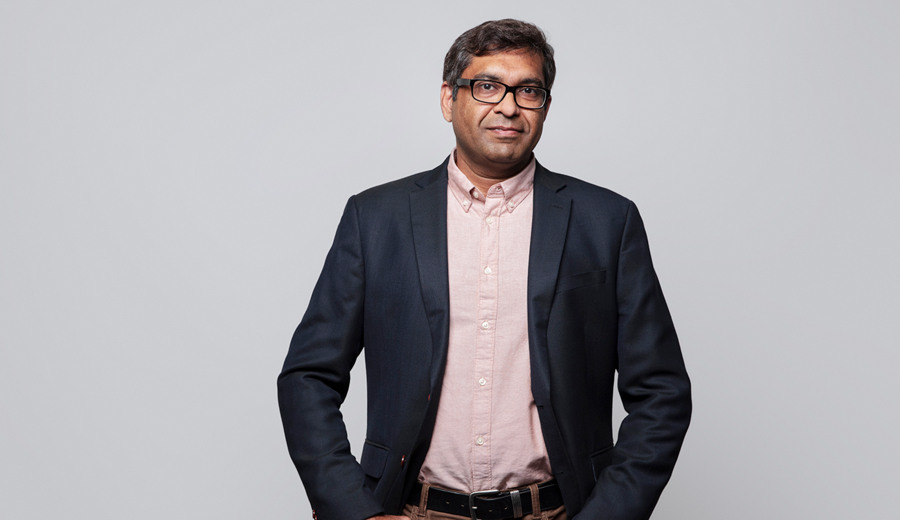
Innovator of the Year at Luleå University of Technology: Farid Akhtar, Professor in Engineering Materials
29 October 2026
New Joining Technology a Key Enabler of Carbon-Free Electricity
A new joining method capable of withstanding extreme temperatures could help secure a place for Swedish research and industry in the rapidly growing international fusion sector. Farid Akhtar, Professor of Engineering Materials, has now been named Innovator of the Year at Luleå University of Technology for his innovation in joining high-temperature-resistant materials.
“This is tremendously rewarding and a confirmation that research at Luleå University of Technology can contribute to the energy systems of the future. This award also belongs to my colleagues in Engineering Materials and our partners at CoorsTek, because this has truly been a team effort,” says Farid Akhtar.
Fusion, in which light atomic nuclei are fused together under intense heat and pressure, has the potential to provide large amounts of carbon-free electricity without generating long-lived radioactive waste. For fusion energy to become a reality, materials must be able to withstand some of the most extreme environments imaginable. One of the greatest challenges concerns the components located closest to the plasma, which reaches temperatures of many millions of degrees inside the reactor. The plasma releases energy in the form of intense heat and radiation, which is then converted into electricity. These components must endure extreme temperatures while also efficiently removing heat.
Current solutions combine tungsten, which can withstand very high temperatures, with copper, which is highly effective at conducting heat away. However, the two materials expand at different rates when heated, creating stresses that can lead to cracks in the joint. If the joint is damaged, cooling performance deteriorates, the component risks failure, and costly maintenance and replacement become necessary.
Together with CoorsTek Sweden, a world leader in advanced ceramic components, Farid Akhtar has developed a new method for joining tungsten and copper. By creating both a mechanical and chemical bond between the materials, the new joint is better able to withstand the large temperature fluctuations found in a fusion reactor. The result is components with a longer service life, fewer operational interruptions and lower costs, all important prerequisites for fusion to become a competitive energy source.
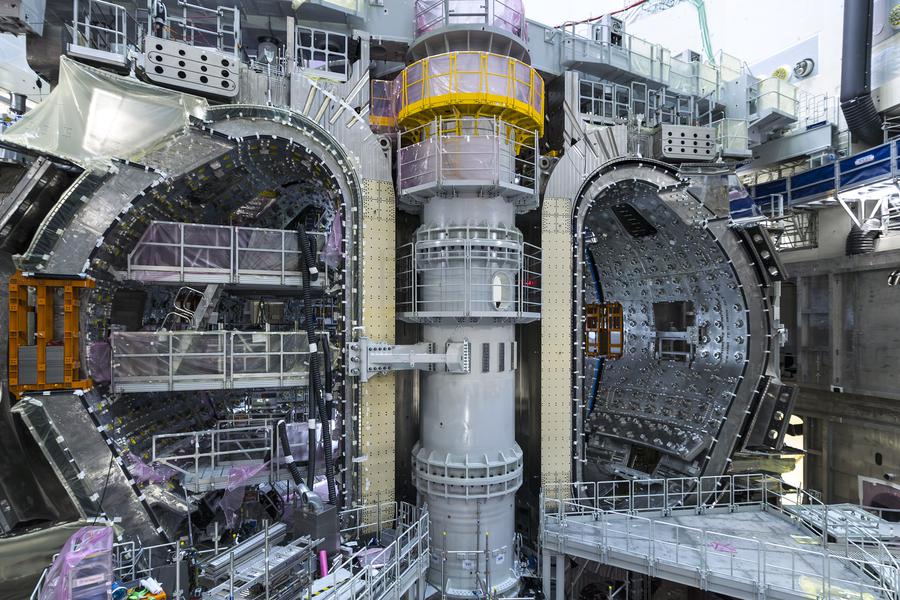
Fusion for Energy (F4E), the EU organisation responsible for Europe’s contribution to international fusion experiments including ITER, plans to evaluate plates made with the new joining technique by Farid Akhtar. ©Fusion for Energy (F4E).
The new method can be integrated into an established industrial manufacturing process, making it suitable for large-scale production in the future. Its potential has already attracted international interest. Fusion for Energy (F4E), the EU organisation responsible for Europe’s contribution to international fusion experiments including ITER, also financed through the EU budget, has ordered plates for evaluation. The solution could also prove valuable in particle accelerators and other advanced industrial environments where extreme heat loads occur.
“Rather than simply combining two materials that behave very differently, we have engineered the interface itself so that they remain securely bonded even when they expand at different rates. The fact that Fusion for Energy has given us the resources and the opportunity to supply our plates to enable testing, demonstrates that our solution is attracting interest from fusion customers with the most demanding performance and quality requirements,” says Farid Akhtar.
Farid Akhtar would also like to thank: Big Science Västerbotten, Big Science Sweden and NuMaP - Nuclear Materials Platform for funding the work and creating the collaborative opportunities that brought together the Engineering Materials research group at Luleå University of Technology and CoorsTek, as well as enabling access to the research facilities available through Big Science Sweden.
Contact
Farid Akhtar
- Professor
- 0920-491793
- farid.akhtar@ltu.se
- Farid Akhtar
Published:
Updated: