Building Materials
Building Materials includes sustainable building materials and their application technologies, recycling and reuse, and applied building physics, especially focusing on the arctic conditions.
Our work addresses one of the central challenges in the construction sector:
"how to drastically reduce environmental impact while ensuring long-term structural reliability, resilience, and functionality of infrastructure systems."
We combine material science, experimental mechanics, durability engineering, and building physics to generate mechanism-based knowledge.
We work to enable a future where:
- Secondary resources are engineered into binder systems
- Mechanical energy replaces fossil-intensive calcination pathways
- Infrastructure materials can monitor their own condition
- Self-healing mechanisms extend structural service life
- Buildings and infrastructure remain resilient under Arctic and extreme climate exposure
Social impact
Our research supports the transition toward climate-neutral and circular built environment by reducing embodied carbon, increasing the use of recycled and secondary resources, and enhancing material durability. By developing sustainable, resilient, and intelligent construction materials, particularly for Arctic and cold-climate conditions, we contribute to longer service life, reduced maintenance, and more resource-efficient infrastructure at national and globa levels.
Sustainable binders and circular materials
A major research focus of the group is the development of low-carbon and alternative binder systems that reduce environmental impact. Our work addresses the full material chain, from raw resource transformation to hardened performance. The group works in close collaboration with the construction and mining sectors, including companies such as Skanska, LKAB, and Boliden.
This research is closely linked to the Competence Centre for Mechanochemical Activation (CCMA), Sweden’s first dedicated platform for mechanochemical processing of secondary resources.
Research includes:
- Reduction of clinker content in cement-based materials through alternative binders and supplementary cementitious materials
- Mechanochemical activation of clays, recycled concrete fines, mine tailings, wood ash, and biomass ashes
- Valorisation and upcycling of secondary raw materials into reactive hydraulic systems
- Development of novel clinkering concepts using waste-based raw mill compositions to reduce reliance on virgin resources
- Performance-based evaluation of innovative binder systems, including reactivity, strength development, durability, and long-term stability
Nanomodified and functional and high-performance materials
The group develops advanced cementitious materials through nanoscale and microscale engineering, combining enhanced mechanical performance with multifunctional capabilities.
Research includes:
- Incorporation of nanomaterials to improve strength development, durability, frost resistance, and microstructural refinement
- Development of UHPC and other high-performance cementitious composites
- Electrically conductive composites
- Self-sensing and structural health monitoring concepts for intelligent infrastructure
- Autogenous self-healing mechanisms.
Durability and arctic performance
Infrastructure in northern regions is exposed to severe environmental stressors, including freeze–thaw cycles, moisture transport, de-icing salts, and temperature gradients. Our research therefore places strong emphasis on:
- Freeze–thaw resistance and scaling mechanisms
- Moisture transport and hygrothermal processes
- Long-term deformation, cracking, and creep
- Service-life assessment in cold and Arctic climates
Nuclear Radiation Shielding Materials
The group conducts research on cement-based materials designed for nuclear radiation shielding applications, addressing safety, durability, and long-term performance requirements in demanding environments.
Research includes:
- Development of high-density and heavy-aggregate concrete for gamma and neutron shielding
- Incorporation of functional fillers to enhance radiation attenuation capacity
- Microstructural optimisation to improve shielding efficiency and mechanical stability
- Durability assessment under thermal, moisture, and radiation exposure
3D Printing, Hybrid Casting, and Renovation Technologies
The group conducts research on additive manufacturing, hybrid casting methods, and advanced renovation techniques for cementitious materials.
Research includes:
- Development of printable binder systems
- Hybrid casting approaches
- Mechanical performance and interfacial bonding behaviour, including interlayer and substrate interfaces
- Interfacial Transition Zone (ITZ) studies to understand microstructural interactions between aggregates, old and new concrete, and repair materials
- Durability and long-term performance of printed, cast, and rehabilitated systems

Research
Learn more about our research projects on sustainable building materials and advanced cementitious composites

Publications
Here you can find a list of publications from Building Materials research group, including journal articles, conference papers and doctoral theses

Contact us
If you are interested in collaboration or would like to learn more on our research, you can find a full list of current personnel here
.jpg)
CCMA
The Competence Centre for Mechanochemical Activation (CCMA) is the first dedicated research centre in Sweden focused on mechanochemical activation for sustainable concrete

Our Lab
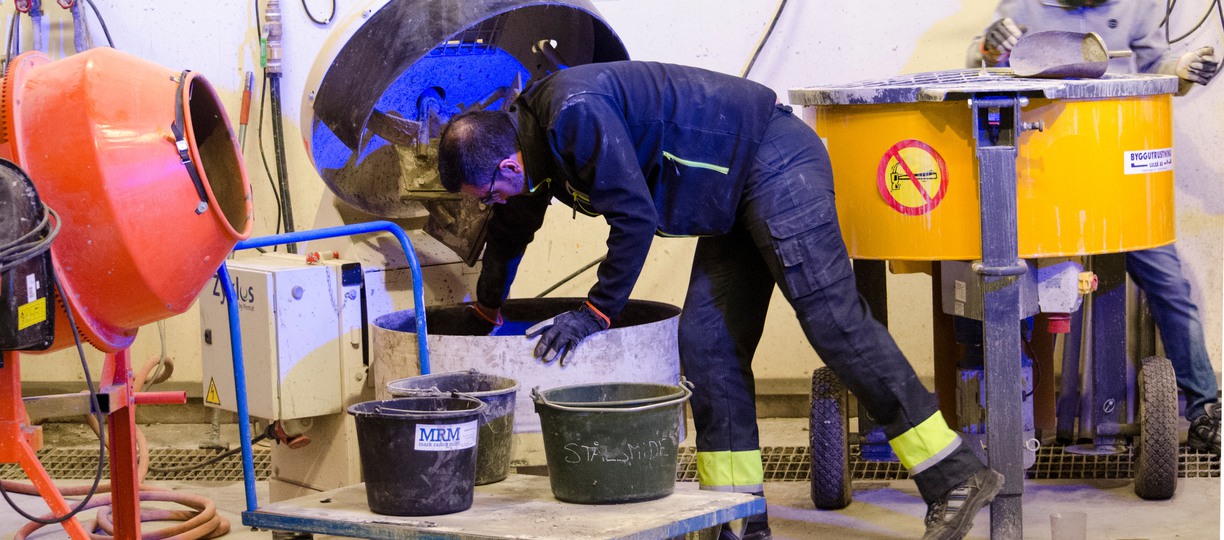
The Laboratory of the Building Materials research group is an advanced experimental facility dedicated to studies and development of sustainable construction materials